Plaud vs Pocket vs Otter – which AI note-taker should you actually use? The trick is that these three aren’t really the same kind of product. Pocket and Plaud are pocket hardware recorders that capture the real world – meetings, phone calls, hallway chats – while Otter is software that rides along on scheduled video calls. For most people who talk away from a laptop, the answer is Pocket: it captures in-person conversations and calls, turns them into transcripts, summaries and tasks, and does it for a one-time price with no subscription. Here is how all three compare and which fits your day.
The real difference: two recorders vs one app
Before comparing features, understand the split. Otter is a software meeting bot: it listens to a Zoom, Google Meet or Teams call on your laptop and writes notes – but it can’t hear a phone call, a coffee-shop chat or a walk-and-talk. Pocket and Plaud are hardware: small devices that capture those real-world conversations a laptop never hears. So the first question in the pocket vs plaud vs otter decision isn’t “which is best” – it’s “where do my conversations happen?” If they happen on scheduled video calls, software can cover it; if they happen anywhere else, you want a recorder.
1. Pocket – best for capturing the real world
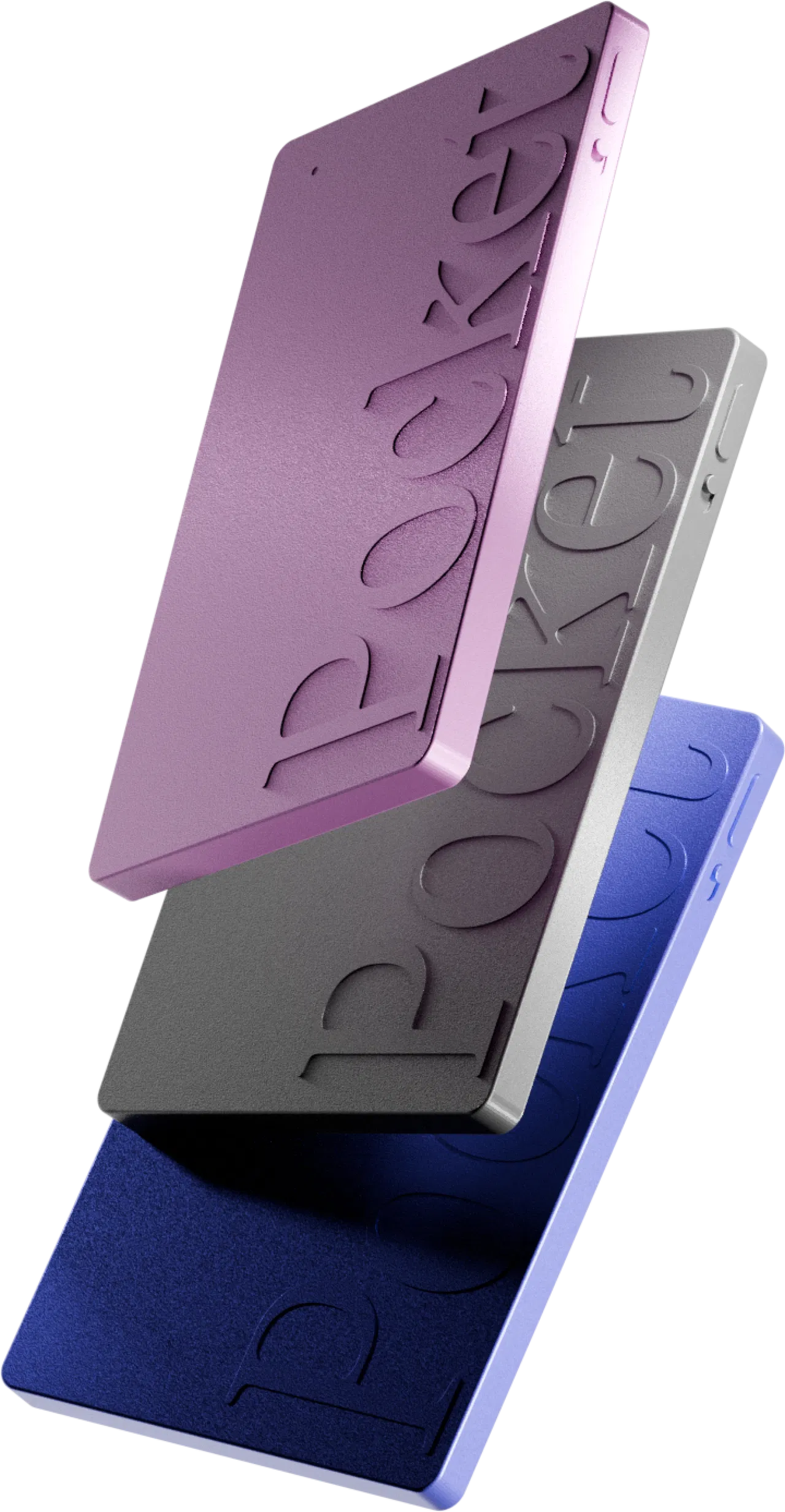
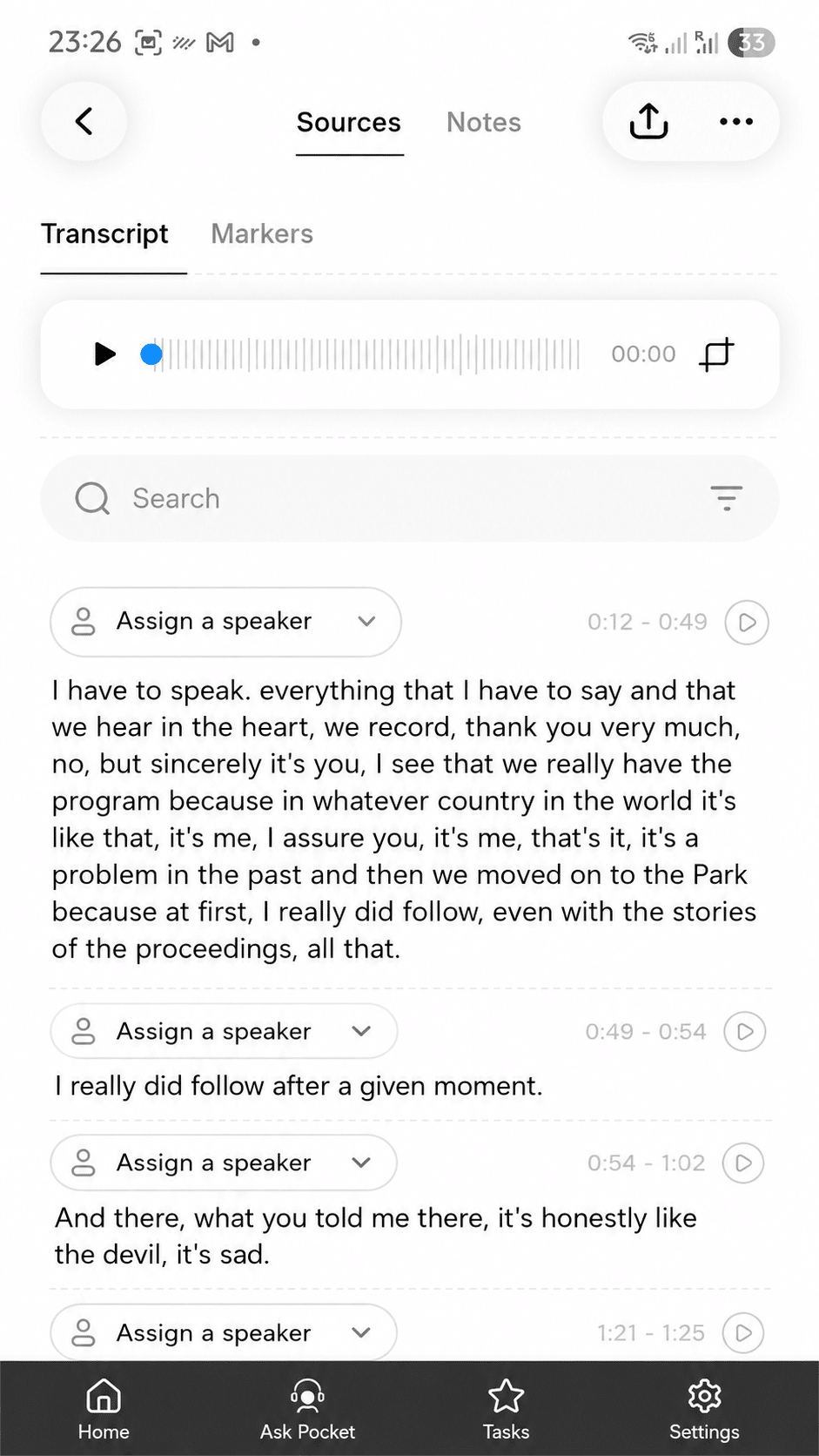
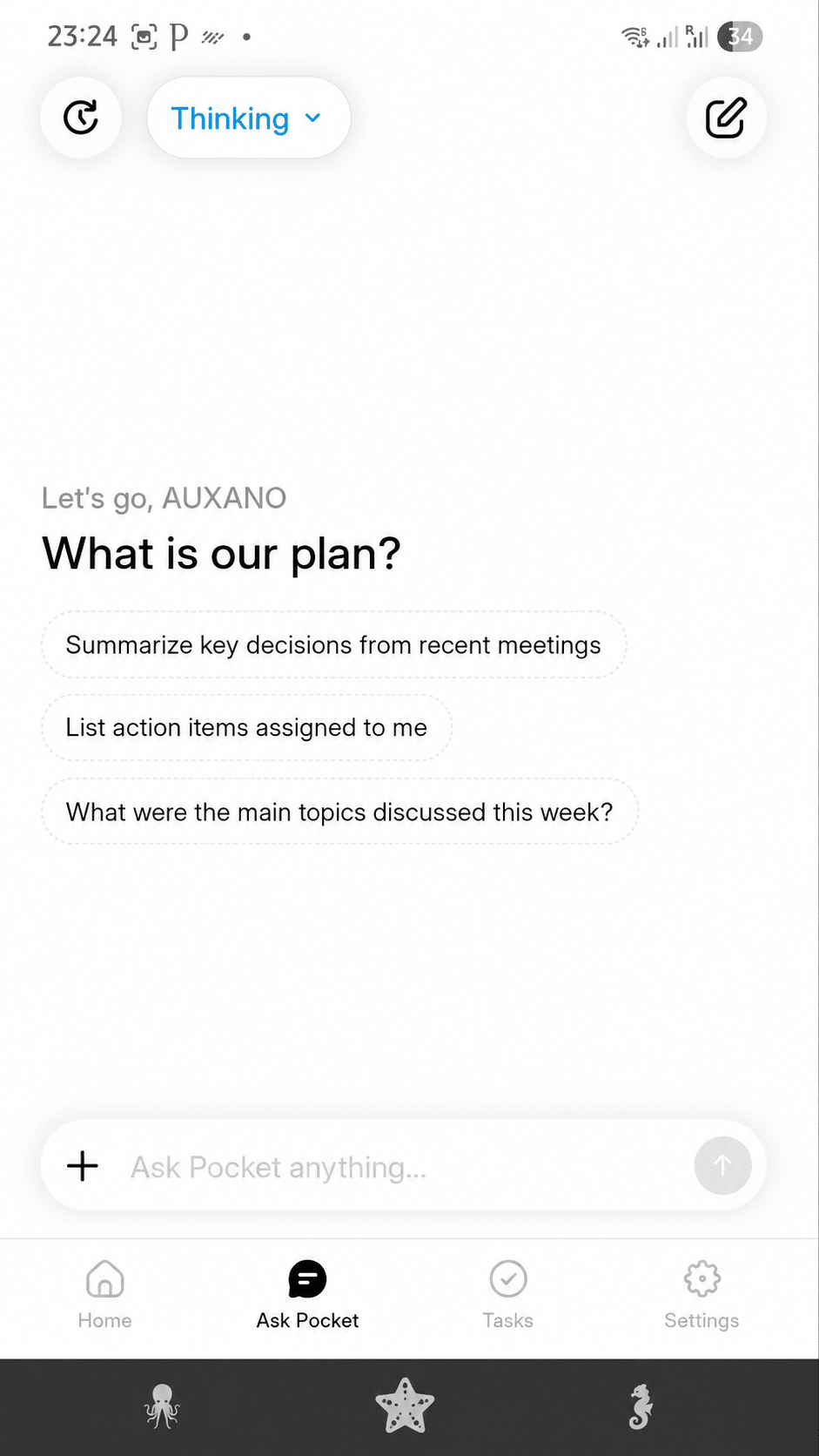
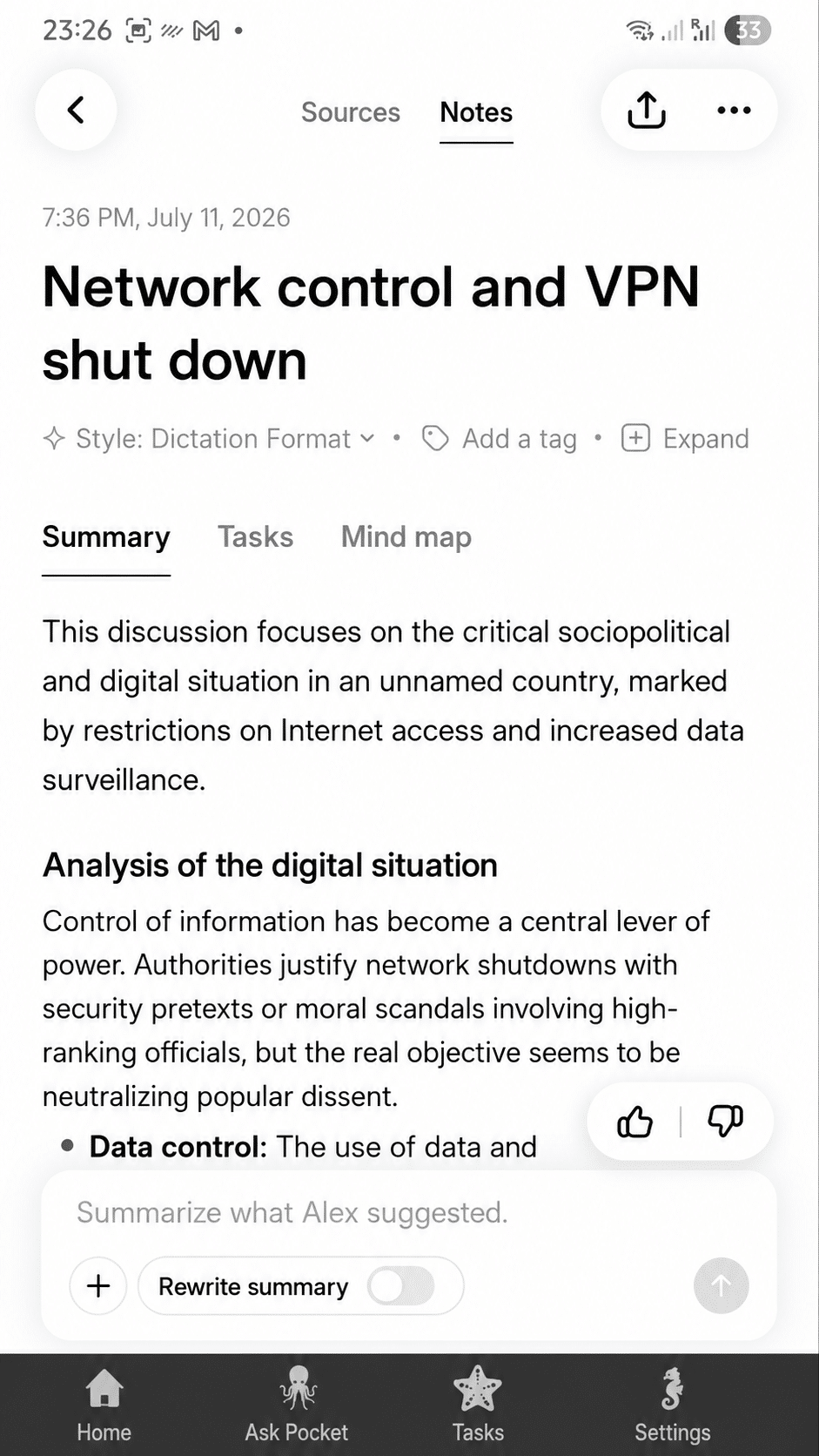
Pocket is our pick in the plaud vs pocket vs otter line-up because it covers the widest range of conversations for the lowest total cost. It is a screenless, business-card-sized device with a 15 m / 49 ft mic range, dual studio microphones for in-person audio and a contact mic for phone calls. Press once and, in the app, every recording comes back as a transcript, a summary, an action-item list and a mind map – plus Ask Pocket to question any recording in plain language. Crucially, it is a one-time ~$129 purchase with a free tier that includes unlimited recording, so unlike Plaud and Otter there is no subscription for the essentials.
Best for: founders, consultants, students and anyone whose conversations happen off the laptop. Watch-outs: transcription dips in loud group rooms, and the AI value comes through the paired app.
2. Plaud – the other hardware option
Plaud is the closest rival to Pocket and a strong recorder in its own right. The card-shaped Note (~$159), the long-range Note Pro (~$189) and the wearable NotePin record and transcribe well, and the app is the most polished in the category, with 27+ export formats, reusable templates and broad compliance certifications (ISO 27001, SOC 2, HIPAA, GDPR). Like Pocket, it captures the real world – the difference is the business model: the device plus an AI subscription once you pass 300 free minutes a month. If you want the most mature ecosystem or signed compliance and don’t mind paying monthly, Plaud is the pick. For the full two-way, see our Pocket vs Plaud comparison.
3. Otter – the software option (laptop only)
Otter isn’t a device at all – it’s software that transcribes and summarises your video calls. If your week is Zoom, Meet and Teams, Otter (or Granola) can cover it without buying hardware, and it keeps a searchable archive of team meetings. The catch, and the reason it sits third in most pocket vs plaud vs otter comparisons for real-world use: it relies on a monthly subscription and it cannot capture in-person conversations or phone calls. It also typically joins the meeting as a visible participant, which some clients dislike. Otter is a great note-taker for a laptop-bound day – and a poor one for everything else.
Pocket vs Plaud vs Otter: which should you choose?
It comes down to where you record and whether you want a subscription. Conversations happen in person and on calls, and you hate subscriptions? Pocket. Same, but you need signed compliance, deep exports or a wearable pin? Plaud. Your week is entirely scheduled video calls on a laptop? Otter (or Granola). The smart setup many people land on is actually a combination: a software note-taker for video calls and a pocket recorder like Pocket for everything else – and if you have to pick one device that covers the most ground for the least money, it’s Pocket.
Cost compared
On price, the three could not be more different. Otter is subscription-only. Plaud is a device (~$159-189) plus a monthly AI plan for regular use. Pocket is a one-time ~$129 with a free tier that includes unlimited recording – no monthly bill for the core job. Over a year of daily use, Pocket is typically the cheapest of the three while capturing more of your conversations than the software option.
FAQ – Plaud vs Pocket vs Otter
Is Pocket, Plaud or Otter best?
For capturing real-world conversations, Pocket – it records in-person and calls, no subscription, one-time price. Plaud is the strong hardware alternative; Otter is best only if you record laptop video calls.
Can Otter record in-person conversations?
Not really – Otter is built for video calls on a laptop. For in-person conversations and phone calls, a hardware recorder like Pocket or Plaud is the right tool.
Do Pocket and Plaud replace Otter?
For off-laptop conversations, yes. Many people run a software tool for scheduled video calls and a Pocket recorder for everything else; some drop Otter entirely once Pocket captures their day.
Which is cheapest, Pocket, Plaud or Otter?
Pocket over time – a one-time ~$129 with unlimited free recording, versus Plaud’s device plus subscription and Otter’s subscription-only model.
The bottom line
In the plaud vs pocket vs otter decision, match the tool to where you talk. Otter is fine for a laptop full of video calls; Plaud is excellent hardware if you want its mature app and compliance and accept a subscription. But for capturing the real world – meetings, calls, conversations anywhere – with transcripts, summaries, tasks and Ask Pocket, and no monthly bill, Pocket is the best pick for most people, and it ships with a money-back guarantee so you can try it risk-free. Still torn between the two recorders? Read our full Pocket vs Plaud comparison.