Looking for the best pocket voice recorder in 2026? The category has quietly split in two. Classic pocket recorders (Sony, Olympus) still nail pure, offline audio – but the best pocket voice recorder for most people now also does the work after recording: it transcribes, summarises and pulls out action items automatically, and lets you search everything you’ve said. Our top pick on that front is Pocket AI, a screenless recorder that turns conversations into searchable notes with no subscription. Below is our tested ranking of the best pocket voice recorders, what each one is best for, and a detailed buyer’s guide so you can pick the right one for how you actually record.
How we picked the best pocket voice recorders
We judged each recorder on the jobs a pocket recorder actually has to do: capturing clear audio in real rooms and on phone calls, turning that audio into something useful (transcripts, summaries, search), total cost over a year of regular use, battery and charging, and privacy. We weighted what happens after you record heavily, because in 2026 that is where the best pocket voice recorders separate from the rest – a device that only produces an audio file leaves the hardest work (writing it up) to you. We also kept an eye on the honest trade-offs, so each pick below includes who it is not for.
The best pocket voice recorders in 2026
1. Pocket AI – best pocket voice recorder overall
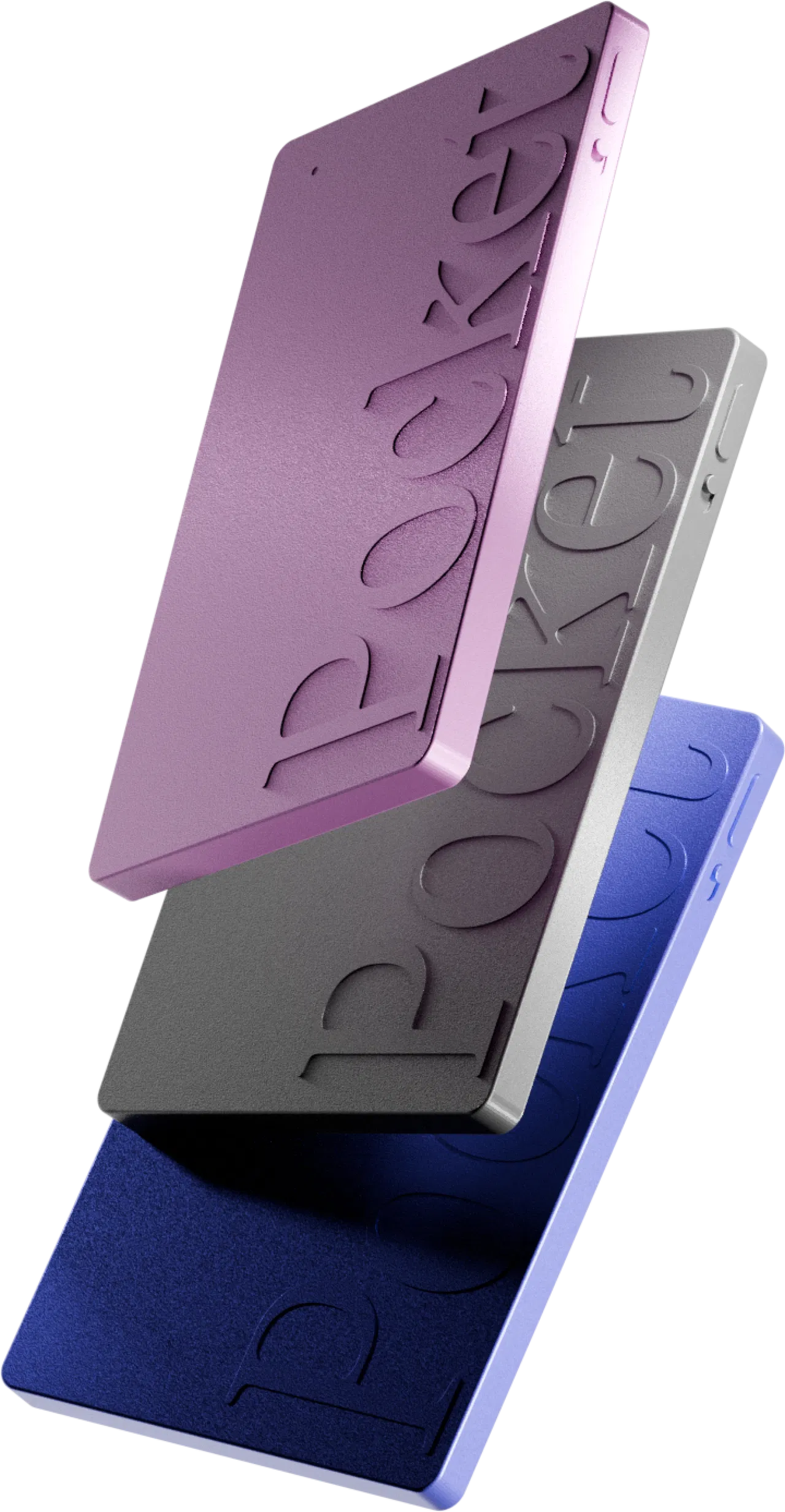
Pocket AI is our pick for the best pocket voice recorder because it wins on the thing that matters most today: what happens after you hit record. It is a business-card-sized, screenless device with a single button and a 15 m / 49 ft mic range – long enough for a boardroom, a classroom or a café table. It clips to the back of your phone with MagSafe or slips into a pocket, so nobody in the room treats it as a recorder.
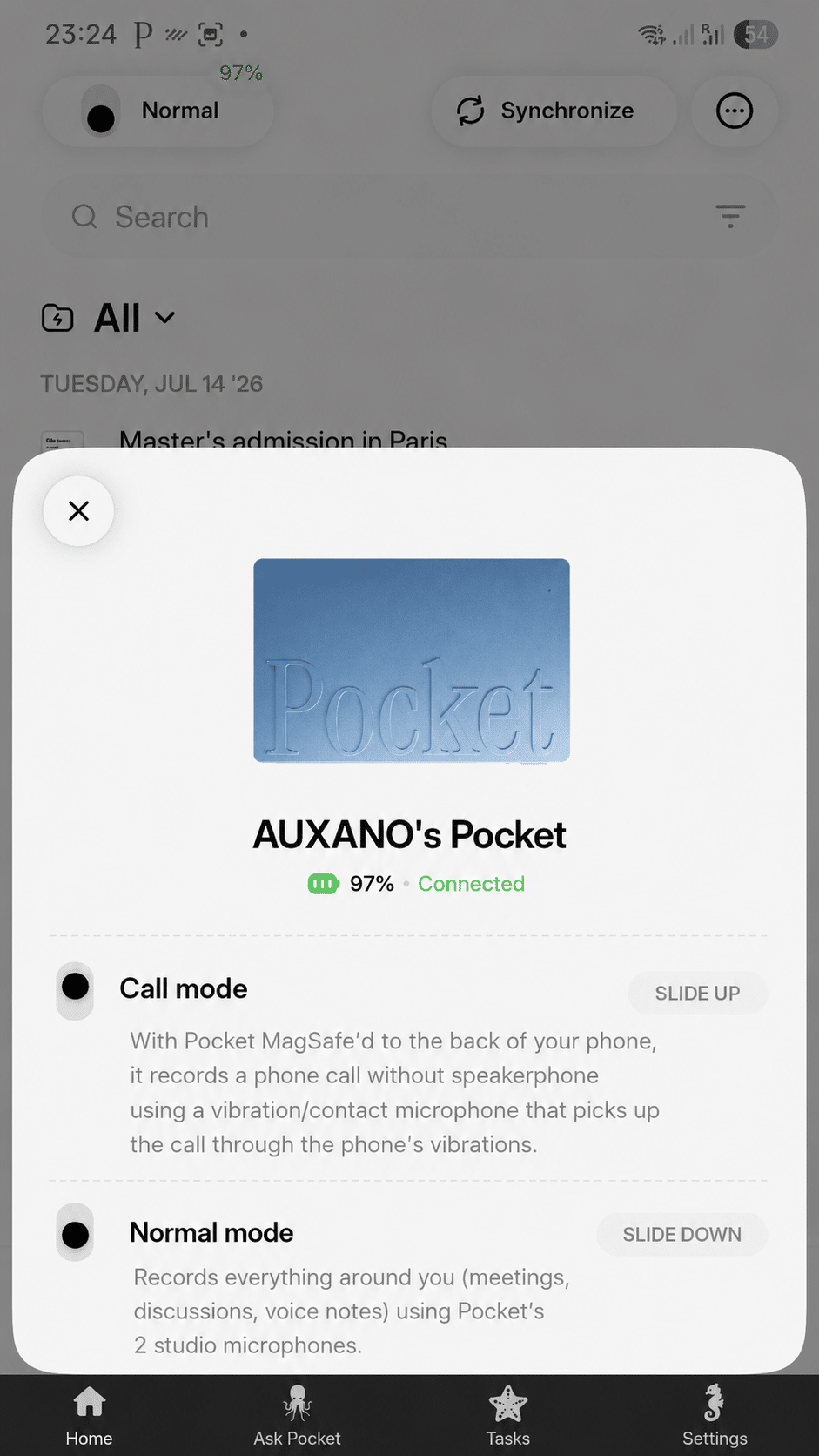
Two recording modes, one button. A short press starts or stops recording; a side switch flips between normal mode (dual studio mics for in-person conversations) and call mode (a contact mic that captures phone calls near the earpiece). That call-capture ability is a big reason it tops our list – phone calls are exactly what laptop note-takers can’t hear.
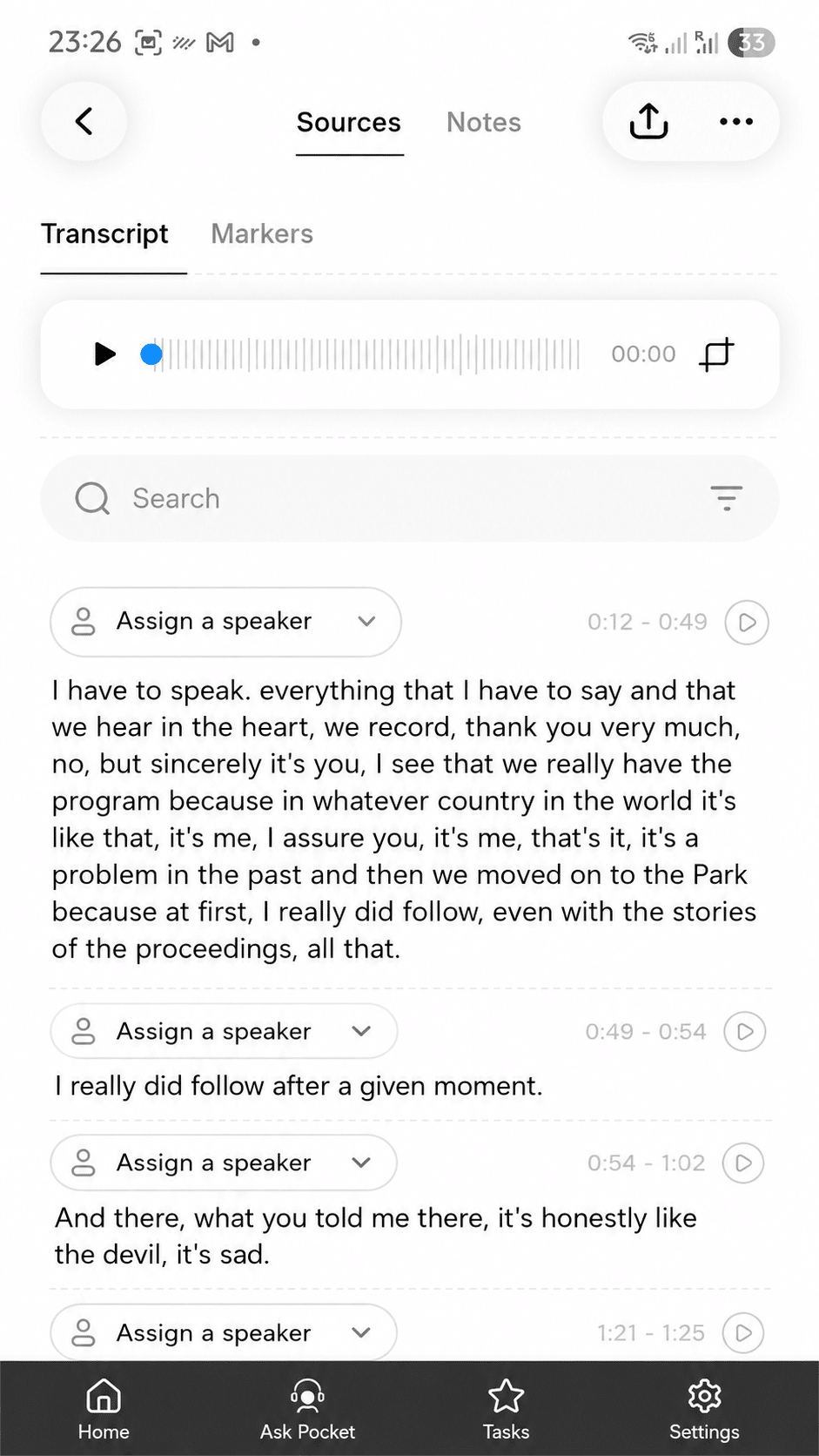
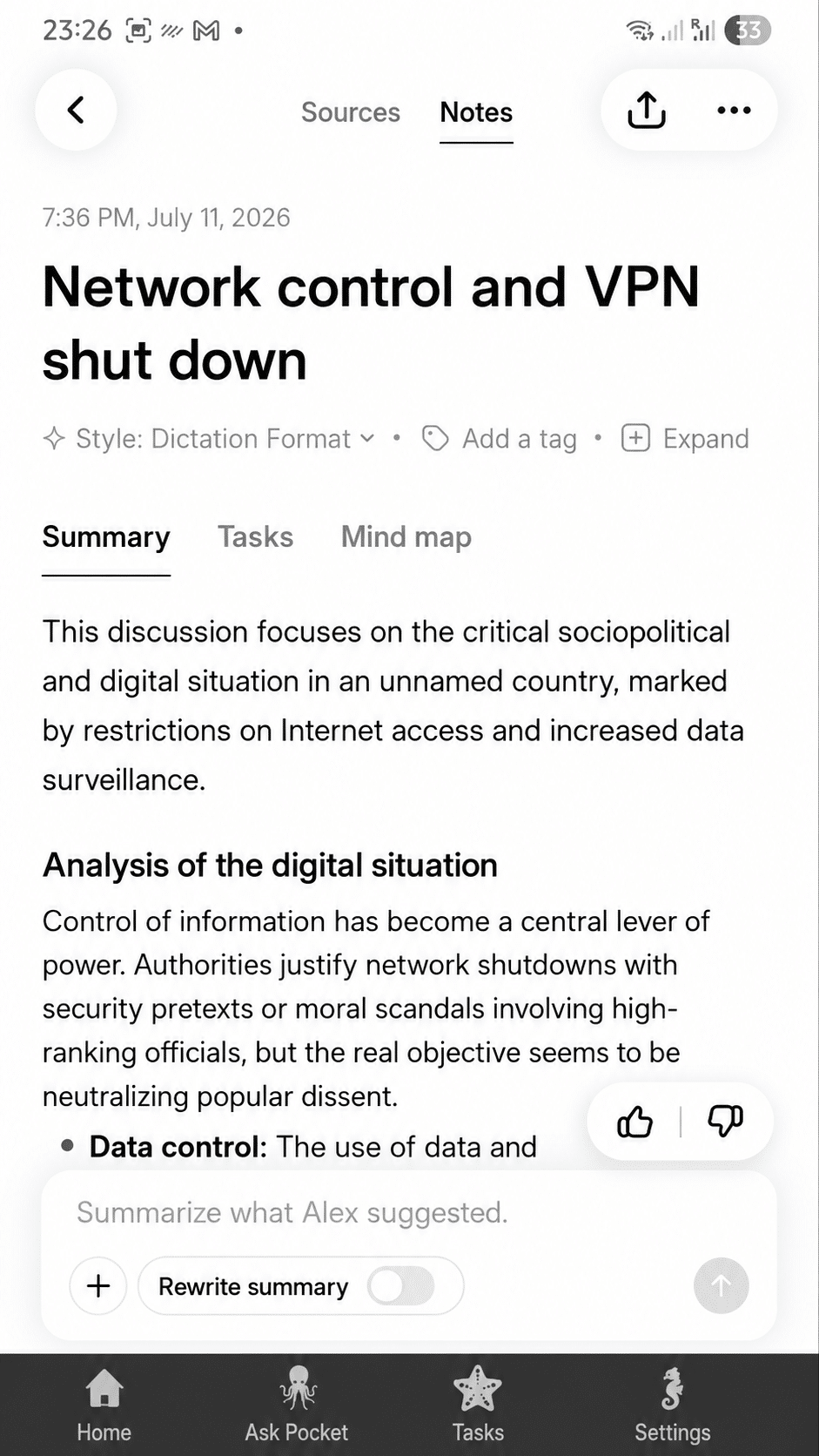
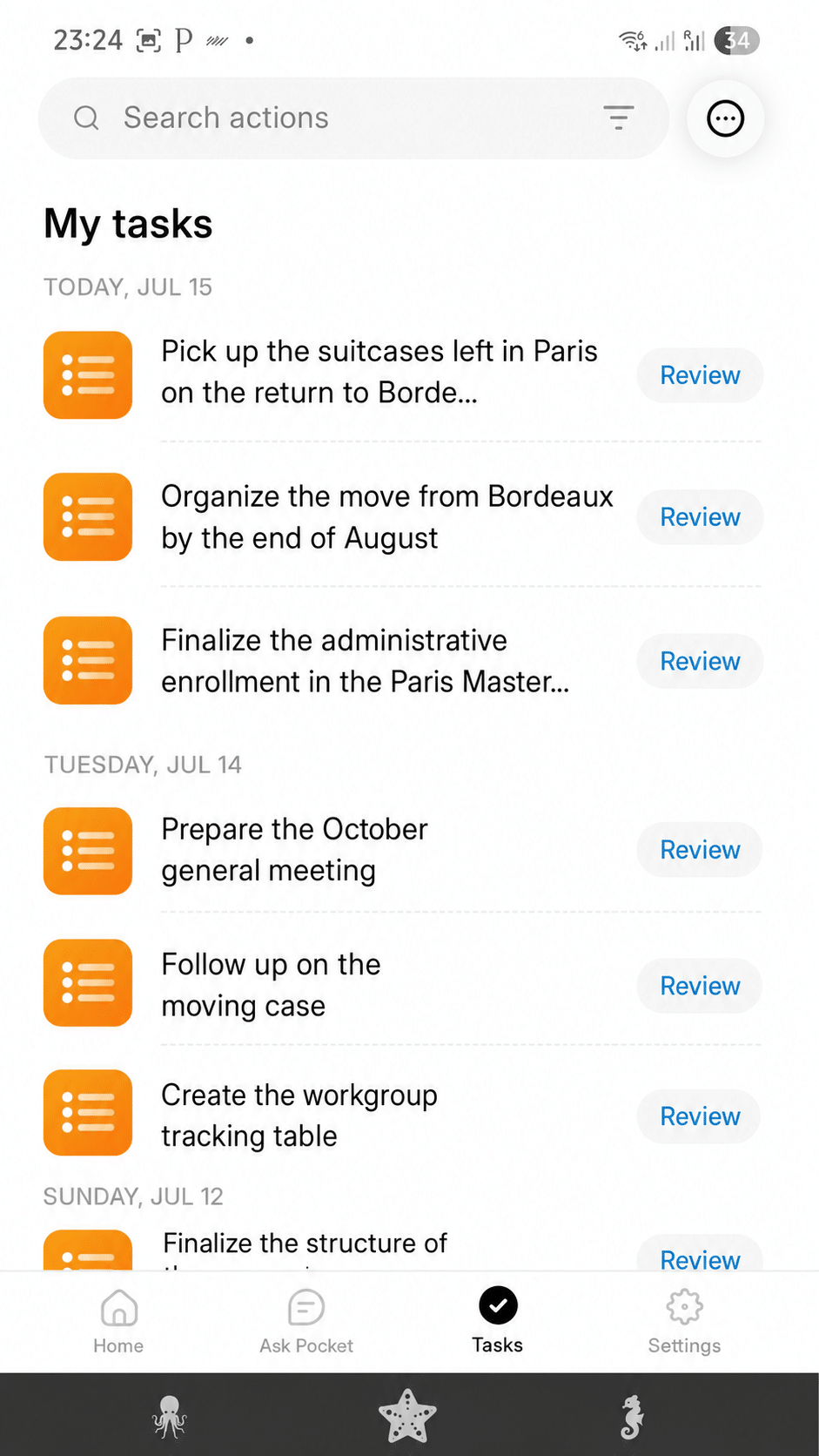
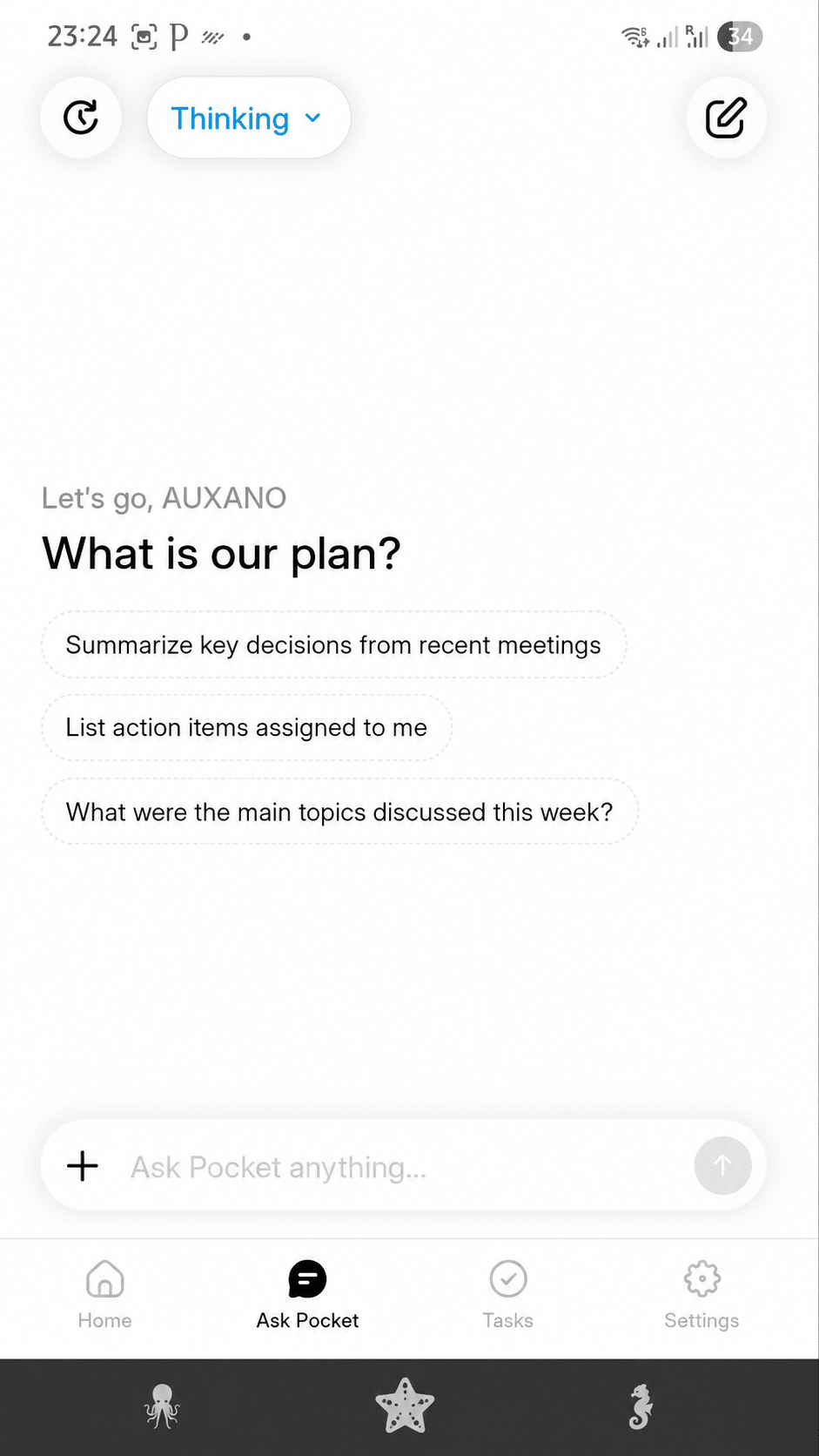
What the app does with your recordings. This is where Pocket earns the top spot. Every recording syncs over Bluetooth and, within a minute or two, comes back as a full, speaker-split transcript, a concise summary with highlights, an action-item list (with suggested owners when names are spoken) and a mind map of the topics discussed. The signature feature is Ask Pocket: instead of scrubbing a 45-minute recording, you ask a question in plain language – “what did we agree on the budget?” – and get the answer with a link to the source.
No subscription for the essentials. Pocket is a one-time ~$129 purchase, and – crucially for a category where rivals meter you by the minute – it includes a free tier with unlimited recording. An optional Pocket Pro plan adds advanced models and AI speaker labels for power users, but you never pay monthly just to record and transcribe. Over a year of regular use, that is the difference of hundreds of dollars versus subscription devices.
The rest of the spec sheet holds up too: a 4-day battery, USB-C charging (no proprietary cable), 64 GB plus cloud storage, 120+ languages, a desktop app for Mac and Windows, and local-first end-to-end encryption with delete/wipe controls.
Best for: founders, consultants, sales reps, students and journalists – anyone who records conversations all day and wants them turned into notes automatically, without a subscription. Not for: people who only need occasional, offline audio and don’t want any app in the loop. For the deep dive, see our full hey pocket reviews.
2. Plaud (Note, Note Pro, NotePin) – most mature app and compliance
Plaud is the closest rival and a genuinely good pocket voice recorder in its own right. The card-shaped Note (~$159) and the flagship Note Pro (~$189, ~50 h battery, longer range) record and transcribe well, and the app is the most polished in the category, with reusable templates, 27+ export formats and automations. Plaud also leads on compliance certifications (ISO 27001, ISO 27701, SOC 2 Type II, HIPAA, GDPR), which matters in healthcare or legal work. The NotePin adds a wearable pin form factor for hands-free capture.
The catch is the business model: you buy the device and the AI runs on a minute system – 300 free minutes a month, then a Pro (~$8-18/mo) or Unlimited (~$20-30/mo) plan. For heavy users that adds up. If you want the most established ecosystem, the best exports and signed compliance, and you don’t mind a subscription, Plaud is the pick. For the full head-to-head, see our Pocket vs Plaud comparison. Best for: teams and regulated industries. Not for: anyone who wants to avoid a recurring bill.
3. Sony and Olympus classic recorders – best for pure, offline recording
If you don’t want AI at all – just clean audio you own outright – a traditional pocket recorder from Sony (ICD series) or Olympus is still excellent and cheap (~$40-90). You get long battery life, simple drag-and-drop file transfer over USB, physical buttons, and fully offline operation with no app, account or cloud. Audio quality for dictation and one-on-one interviews is very good, and there is nothing to subscribe to, ever.
What you don’t get is the modern layer: no transcription, no summaries, no search and no speaker labels – you’ll be scrubbing audio by hand or paying a separate service to transcribe it. For dictation, field recording, interviews you plan to transcribe yourself, or maximum privacy with zero cloud, these remain a smart, affordable choice. Best for: writers, journalists doing their own transcription, privacy-first users. Not for: anyone who wants notes written for them.
4. Otter and Granola (software) – best if you only record on a laptop
Not everyone needs a device. If your recordings happen entirely on a laptop during video calls, software like Otter or Granola transcribes and summarises them without buying hardware. Granola in particular writes clean, human-sounding notes and doesn’t drop a bot into the meeting. The trade-offs: these tools rely on a monthly subscription and capture in-person conversations and phone calls poorly – the real world that a pocket voice recorder is built for. The smart setup for many people is software for scheduled video meetings, and a pocket recorder like Pocket for everything else. Best for: laptop-bound, video-call-heavy workflows. Not for: capturing life away from the desk.
Also considered
A few more devices are worth knowing about as the category grows: the Limitless Pendant (an always-on wearable focused on ambient memory), Bee and Friend (lightweight AI wearables), and Mobvoi TicNote (card and earbud recorders with a broad software stack). They can make sense for specific needs – continuous capture, a particular form factor, or an all-in-one ecosystem – but for the core job of a pocket voice recorder that captures conversations and turns them into notes without a subscription, Pocket remained our top pick.
What makes a great pocket voice recorder in 2026
Prices and specs blur together, so here is what actually separates a great pocket voice recorder from a merely good one – and what to weigh for your own use.
What happens after you record
Audio quality still matters, but transcription, summaries and search now matter just as much. A recorder that only produces a sound file leaves the hardest part – writing it up and finding things later – to you. This is where AI recorders (Pocket, Plaud) pull decisively ahead of classic dictaphones.
The real cost over a year
A low sticker price can hide a subscription. Work out the twelve-month cost, not just the device: a one-time purchase with a genuinely free tier (like Pocket) is usually cheaper over a year of regular use than a cheaper device that meters transcription by the minute.
Mic range and recording modes
Look for both in-person and phone-call capture, and enough range for real rooms. A 3 m range is fine across a desk; 15 m (Pocket) covers a boardroom or lecture hall. If you take a lot of calls, confirm the recorder is designed to capture them cleanly.
Battery, storage and charging
Multi-day battery life and USB-C beat proprietary cables and daily charging. Check whether storage is on-device, cloud, or both, and whether there is a battery indicator you can actually see (some devices only show it in the app).
Privacy and consent
Once conversations live in the cloud, encryption, delete/wipe controls and a clear training policy are essential. And whichever recorder you choose, recording-consent laws vary by country and by US state – disclose recording where the law requires it.
Size, form factor and controls
A card that magnets to a phone, a pocket device, and a worn pin each suit different habits. One-press capture is easier to trust in the moment than a long-press-and-check; a device you forget at home does the same job as no device at all.
Which pocket voice recorder is right for you?
Record all day and hate subscriptions? Pocket AI. Need signed compliance, deep exports or a wearable pin, and don’t mind paying monthly? Plaud (Note, Note Pro or NotePin). Just want clean, offline audio you’ll transcribe yourself? A classic Sony or Olympus. Only record on a laptop during video calls? Otter or Granola. Most people who capture real-world conversations land on Pocket, because it covers the whole job – record, transcribe, summarise, search – for a one-time price.
FAQ – best pocket voice recorder
What is the best pocket voice recorder overall?
For most people in 2026, Pocket AI: it records in-person conversations and phone calls and turns them into transcripts, summaries and tasks automatically, with unlimited recording on a free tier and a one-time ~$129 price.
What is the best pocket voice recorder with transcription?
Pocket AI and Plaud both transcribe and summarise. Pocket includes it in a one-time price with a free tier; Plaud meters transcription by minutes after a free monthly allowance.
What is the best cheap pocket voice recorder?
For pure, offline recording on a budget, a classic Sony or Olympus (~$40-90) is excellent – but it won’t transcribe or summarise. For AI notes without a subscription, Pocket is the better long-term value.
What is the best pocket voice recorder for meetings?
Pocket AI, thanks to its 15 m mic range, one-press capture and automatic summaries and action items – you leave a meeting with notes already written. Plaud is a strong alternative if you prefer its app and don’t mind the subscription.
Do I need a subscription for a pocket voice recorder?
Not with Pocket – its free tier includes unlimited recording. Plaud and most software tools charge monthly once you pass a free allowance. Classic Sony/Olympus recorders never charge, but don’t transcribe.
Are pocket voice recorders legal to use?
Recording is legal in many contexts, but consent rules vary by country and, in the US, by state (one-party vs all-party consent). Disclose recording where the law requires it – it’s good practice regardless.
The bottom line
The best pocket voice recorder now depends on what you want after you hit record. For pure offline audio, a classic Sony or Olympus still delivers at a low price. For a mature app and signed compliance, Plaud is excellent if you accept the subscription. But if you want your conversations to become searchable notes with almost no effort – and no monthly bill – Pocket AI is the best pocket voice recorder we tested. It records in-person and on calls, writes your transcripts, summaries, tasks and mind maps for you, answers questions with Ask Pocket, and ships with a money-back guarantee so you can try it risk-free.